COMMUNITY AT Belonging Before Barriers
A place to connect, contribute and belong
Belonging Before Barriers is building more than a consultancy.
We are creating opportunities for neurodivergent people, families, supporters and community members to connect, share knowledge and influence the services, resources and conversations that affect their lives.
Our community work will grow thoughtfully. We will begin by listening, learning what people need and developing opportunities that are accessible, respectful and shaped with community rather than simply delivered to it.
You do not need to arrive with the right words, a formal diagnosis or a polished story to be part of the conversation.
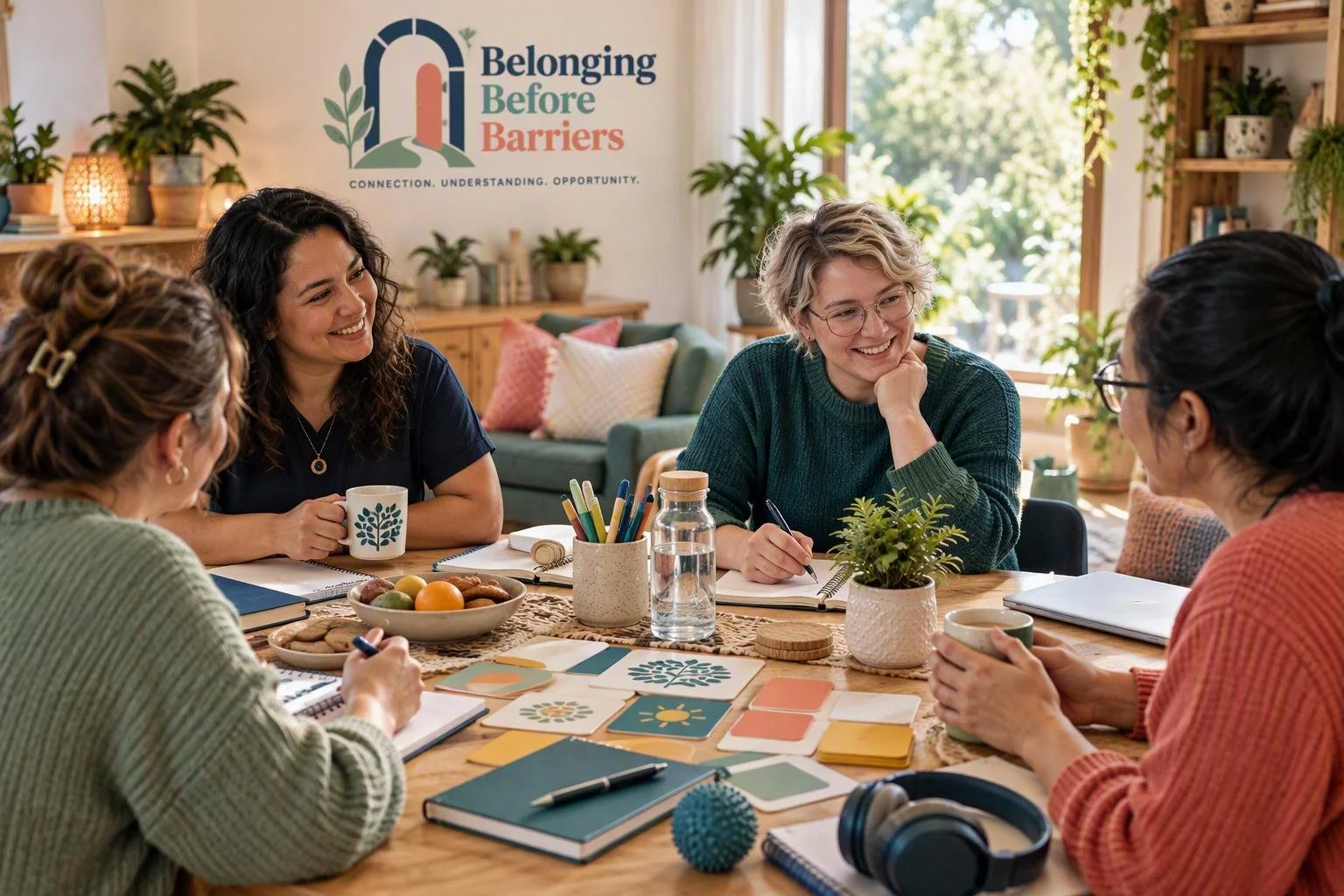
Belonging cannot be built from a distance
The people who experience barriers are often asked to explain those barriers repeatedly, adapt to systems that were not designed with them in mind or wait until decisions have already been made before being invited to comment.
Belonging Before Barriers believes community participation should begin earlier.
Community knowledge can help identify what is missing, challenge assumptions and shape services, resources and priorities that better reflect people’s everyday lives.
This page is therefore not only about inviting people to attend future activities. It is about creating clearer pathways for community members to influence what BBB learns, builds and advocates for.
Community is not an audience for BBB’s work. Community is part of how the work should be shaped.
There is room for different experiences
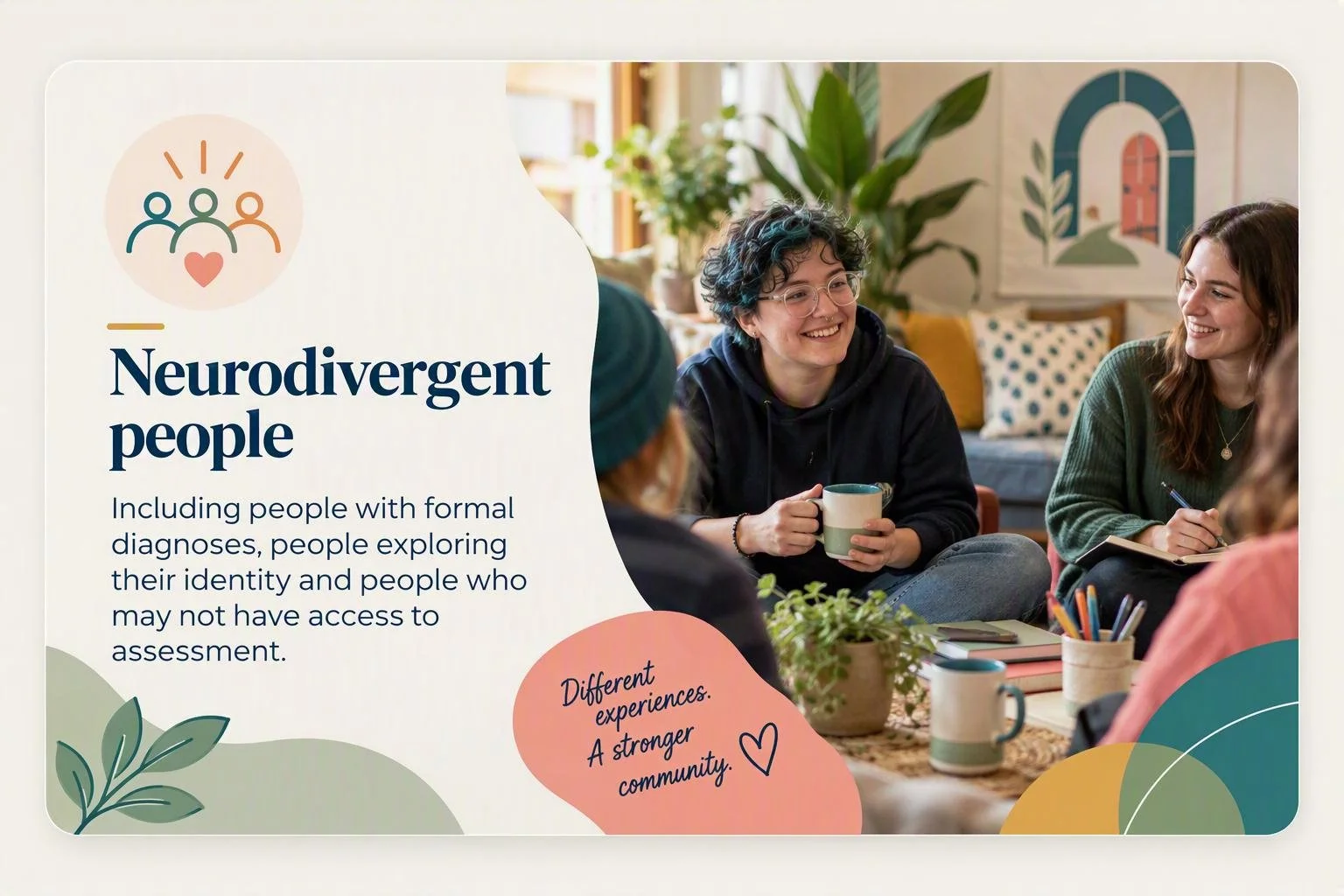
Participation should not depend on someone being able to prove a diagnosis, disclose personal information or represent an entire community.
Starting small, listening carefully
Listen
Create accessible ways for people to describe what is helping, what is missing and what they would like to see developed.
Connect
Develop thoughtful opportunities for people to meet, share knowledge and participate without pressure to communicate or contribute in one prescribed way.
Create together
Use community input to shape practical resources, learning opportunities, pilot projects and future BBB priorities.
Belonging Before Barriers Listening Lab
Listening before launching
One of the first ideas BBB is exploring is the BBB Listening Lab, a facilitated community conversation designed to understand what people need before new programs, resources or events are developed.
The Listening Lab would not be a focus group designed to validate decisions that have already been made. It would create an accessible starting point for community members to identify priorities, share different perspectives and influence what BBB considers next.
What a Listening Lab could explore
Participation options
A future Listening Lab will allow people to contribute through:
Conversation
Writing
Visual cards
Anonymous responses
Online input
Individual reflections
Follow-up feedback
PLEASE NOTE: A Listening Lab would be a community participation and learning activity. It would not be therapy, crisis support, diagnosis, clinical advice or an assessment of individual needs.
What community activities might grow from listening
Possibilities, not promises
BBB’s future community activities will be shaped by what people say is useful, accessible and missing. Possibilities may include:
Community conversations
Accessible facilitated discussions about belonging, barriers, identity and participation.
Peer connection
Structured opportunities for people with shared experiences to connect, with clear purpose, boundaries and participation choices.
Learning for individuals and families
Practical, non-clinical sessions about neurodiversity, later recognition, communication, support and navigating systems.
Community workshops
Collaborative sessions that explore a local issue, build practical knowledge or create a shared resource.
Resources shaped by lived experience
Plain-language tools, guides and visual materials informed by community priorities.
Pilot projects and partnerships
Small, carefully scoped initiatives developed with community organisations or other purpose-aligned partners.
Community participation should feel clear and respectful
Clear and safe boundaries
BBB’s community activities may provide opportunities for connection, learning and participation, but they are not a replacement for:
Therapy or psychological treatment
Assessment or diagnosis
Medical advice
Emergency or crisis assistance
Individual case management
Legal advocacy or representation
Specialist peer-support programs unless explicitly designed and governed as such
BBB’s approved scope is organisational development, education and service design rather than clinical assessment, diagnosis, legal auditing or certification.
Supporting statement
Any future group or community activity should clearly explain its purpose, facilitators, participation expectations, privacy arrangements and support boundaries before people join.
Help shape what comes next
BBB is still building its community pathway, and that is intentional.
Rather than deciding what people need from a distance, we want to begin by understanding the experiences, strengths, barriers and ideas already present within the community.
You might want to contribute if you:
Have an experience you would like Belonging Before Barriers to learn from
See a gap in current community information or connection
Have an idea for a future workshop, resource or conversation
Represent an organisation interested in a community partnership
Would like to hear about future BBB community opportunities